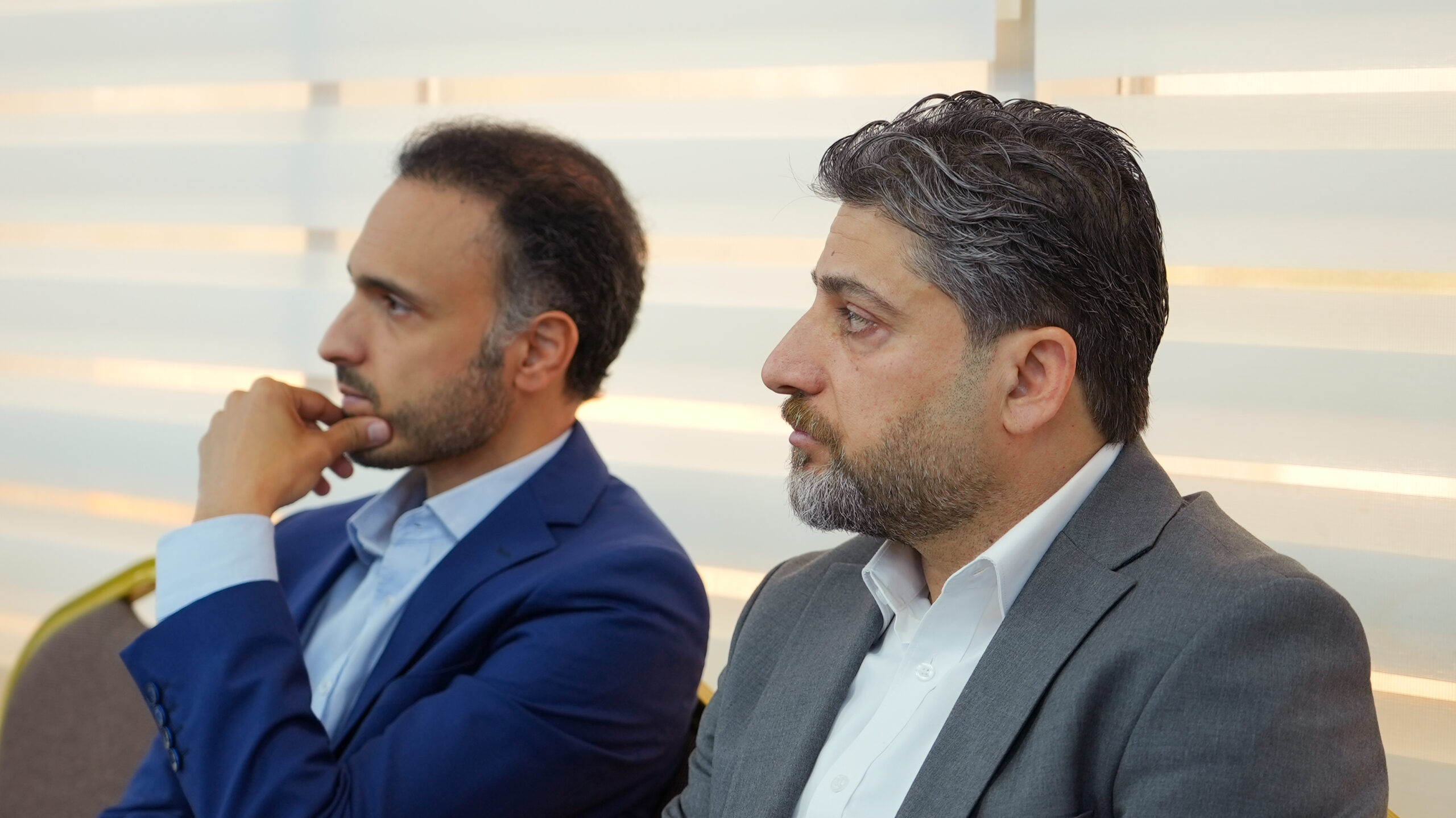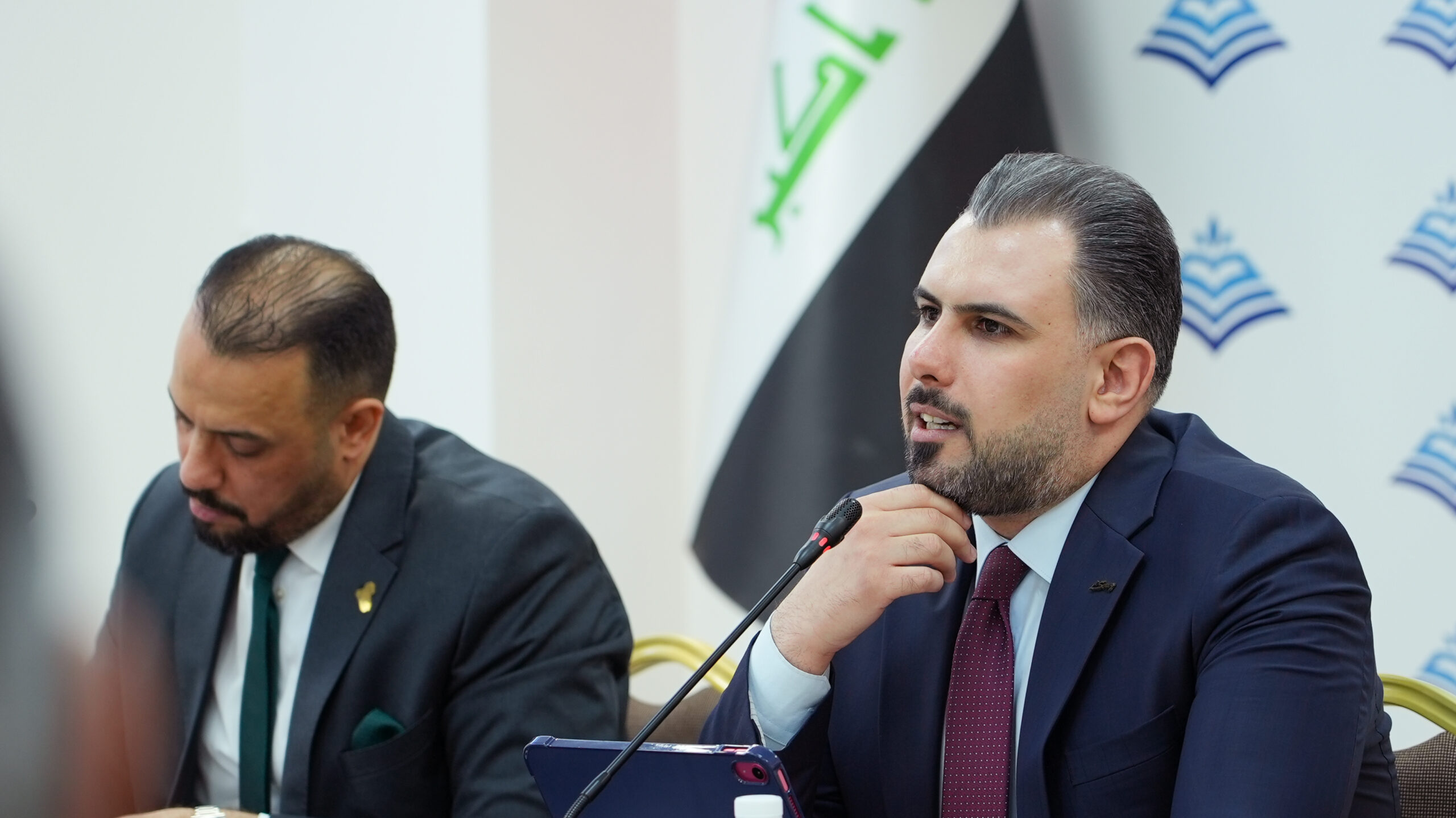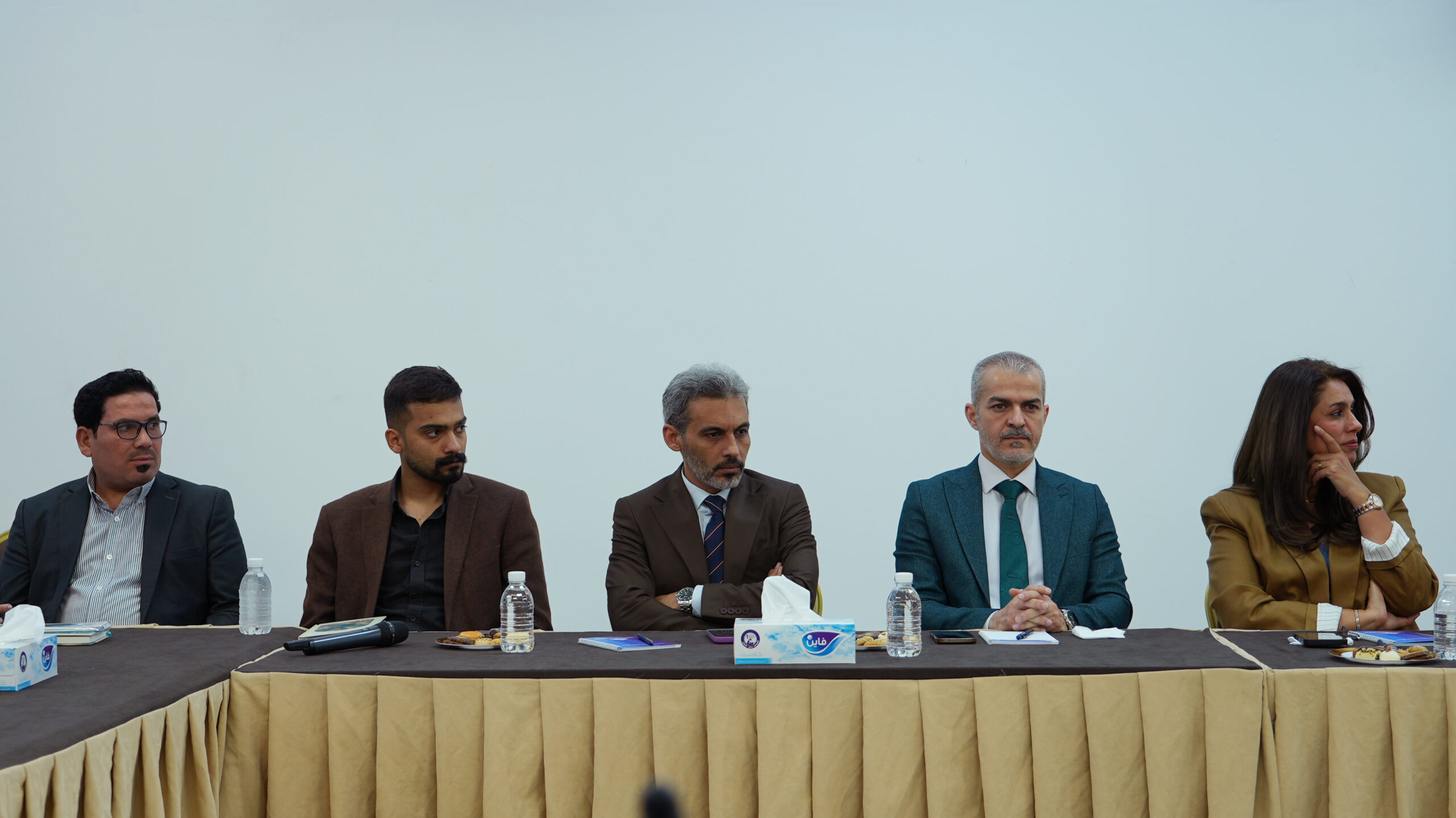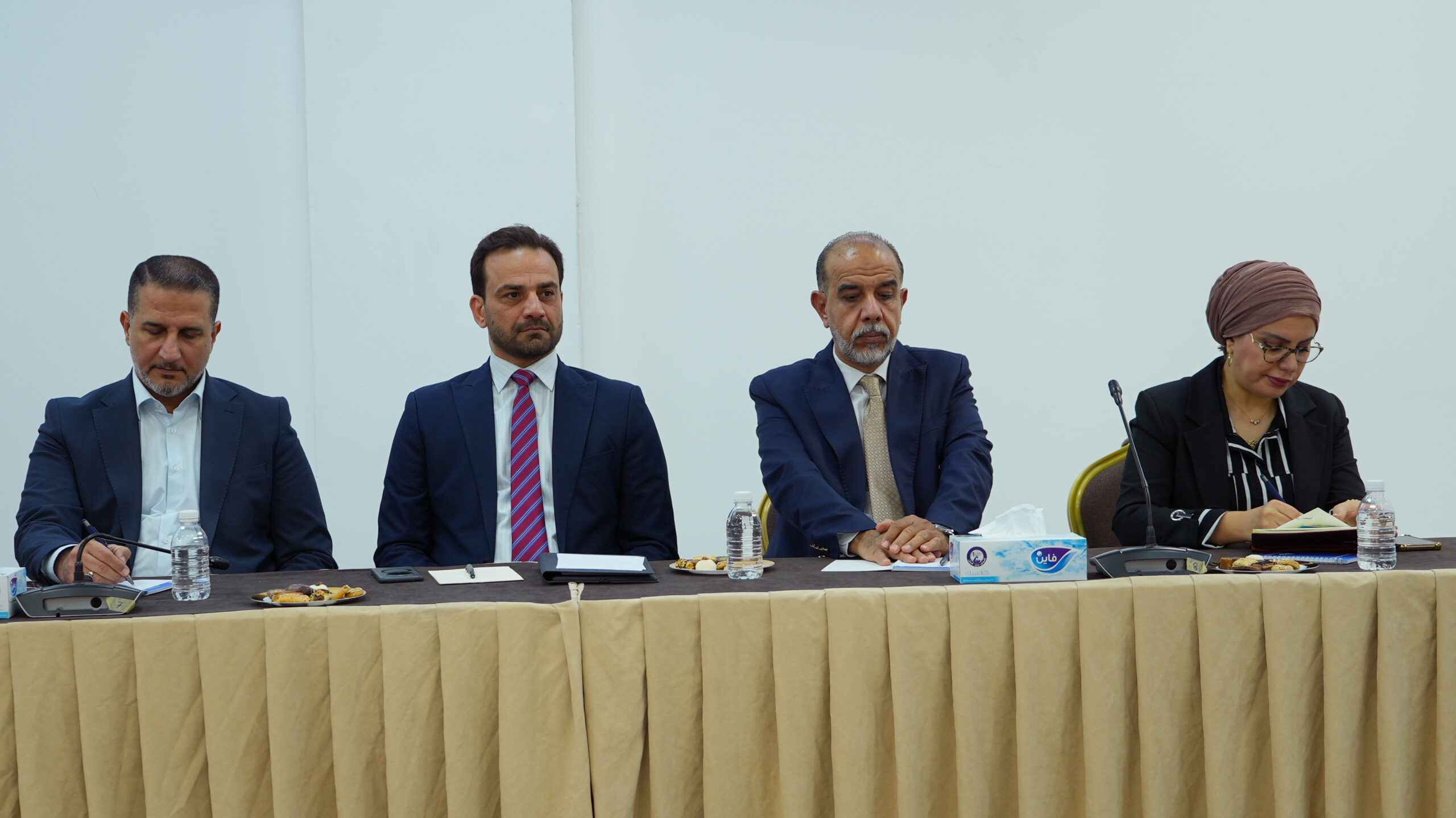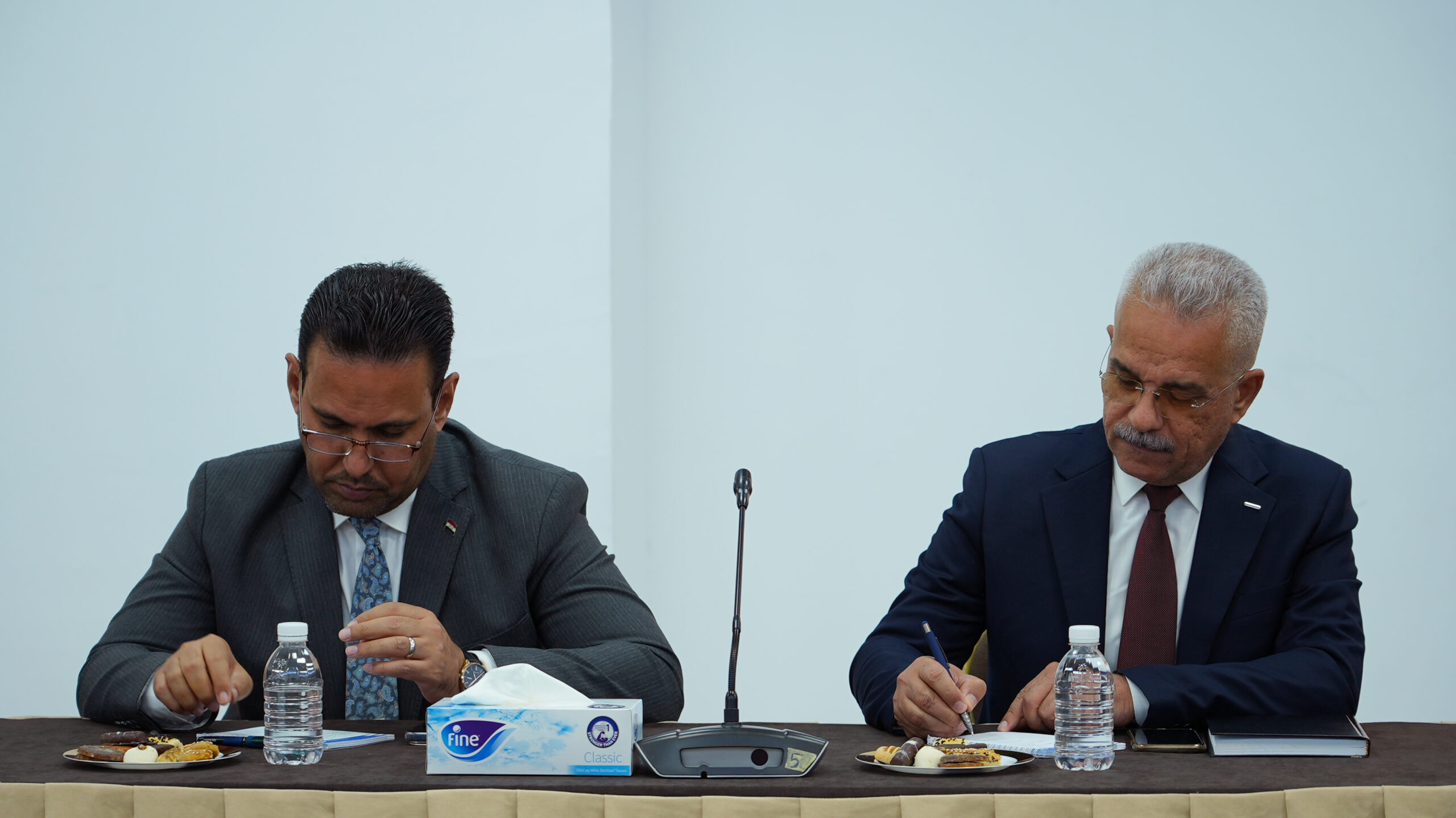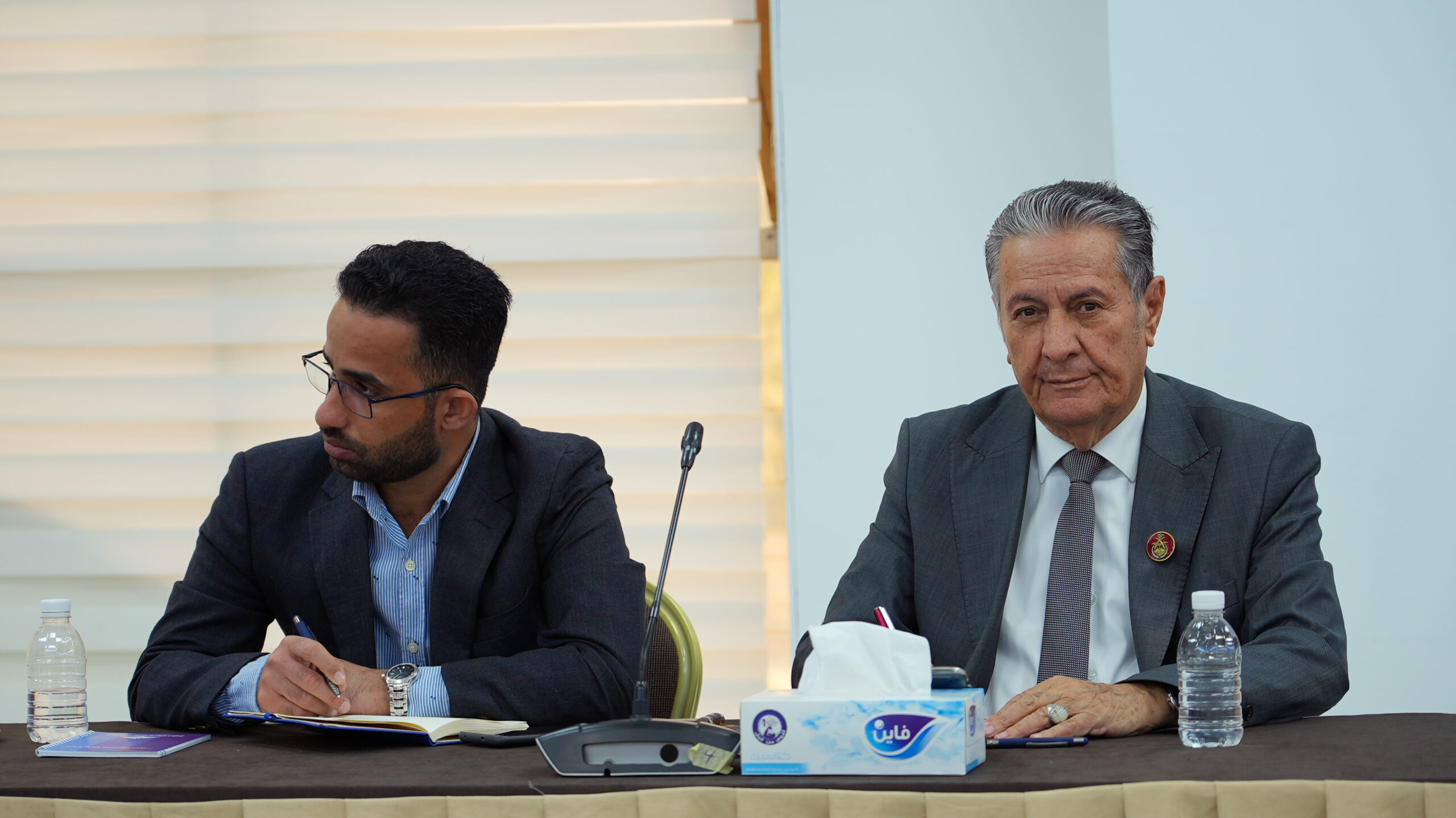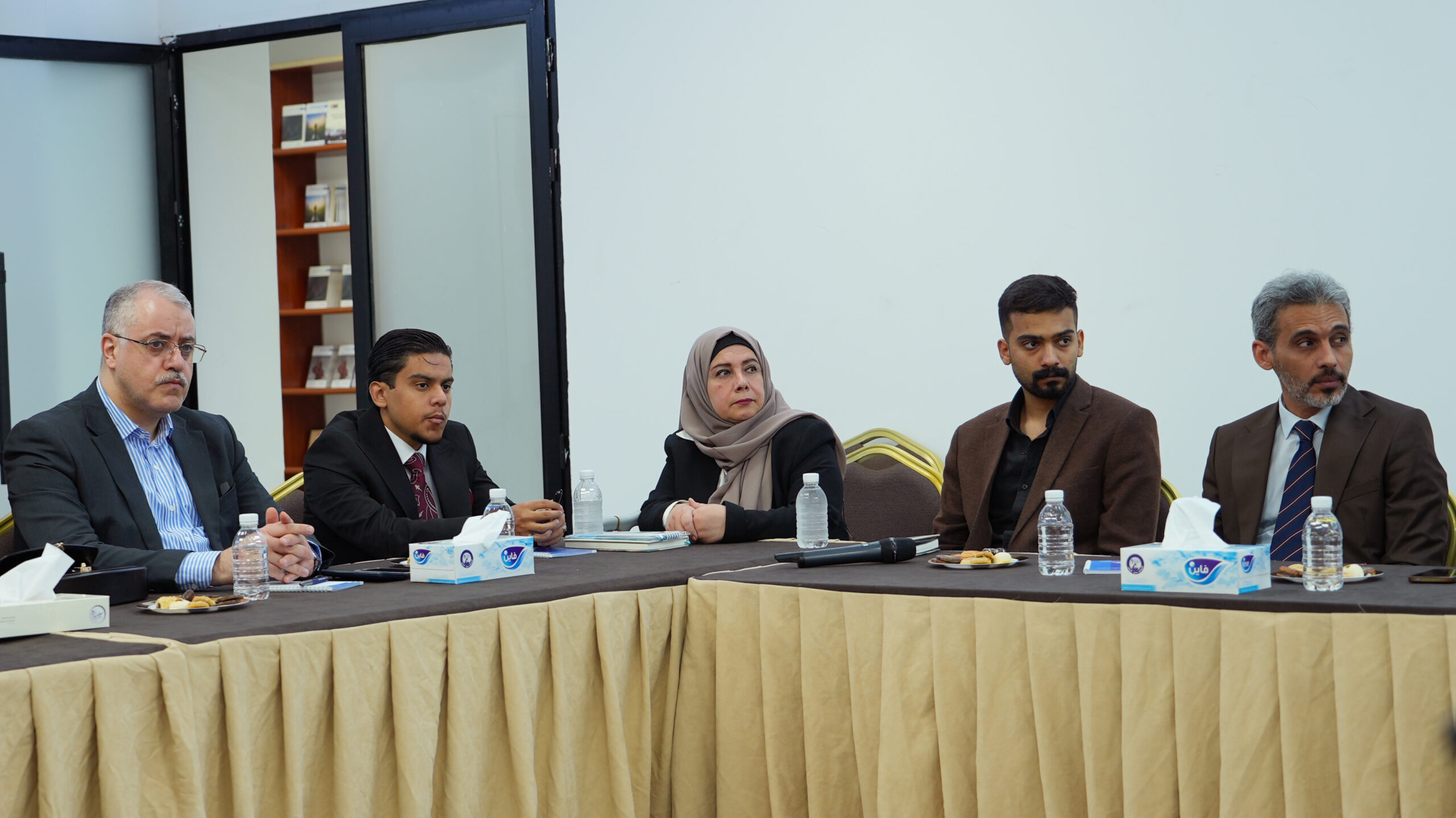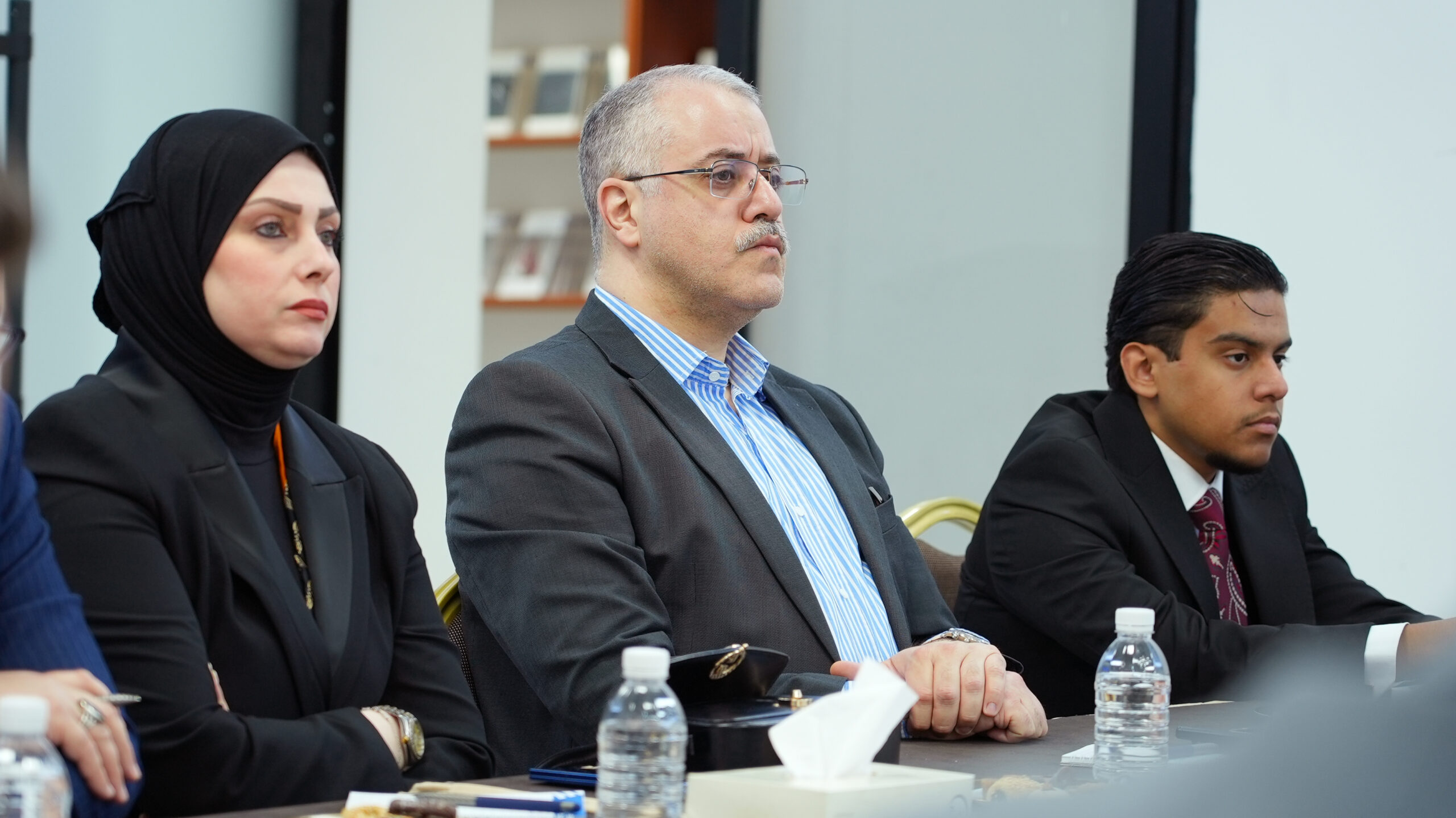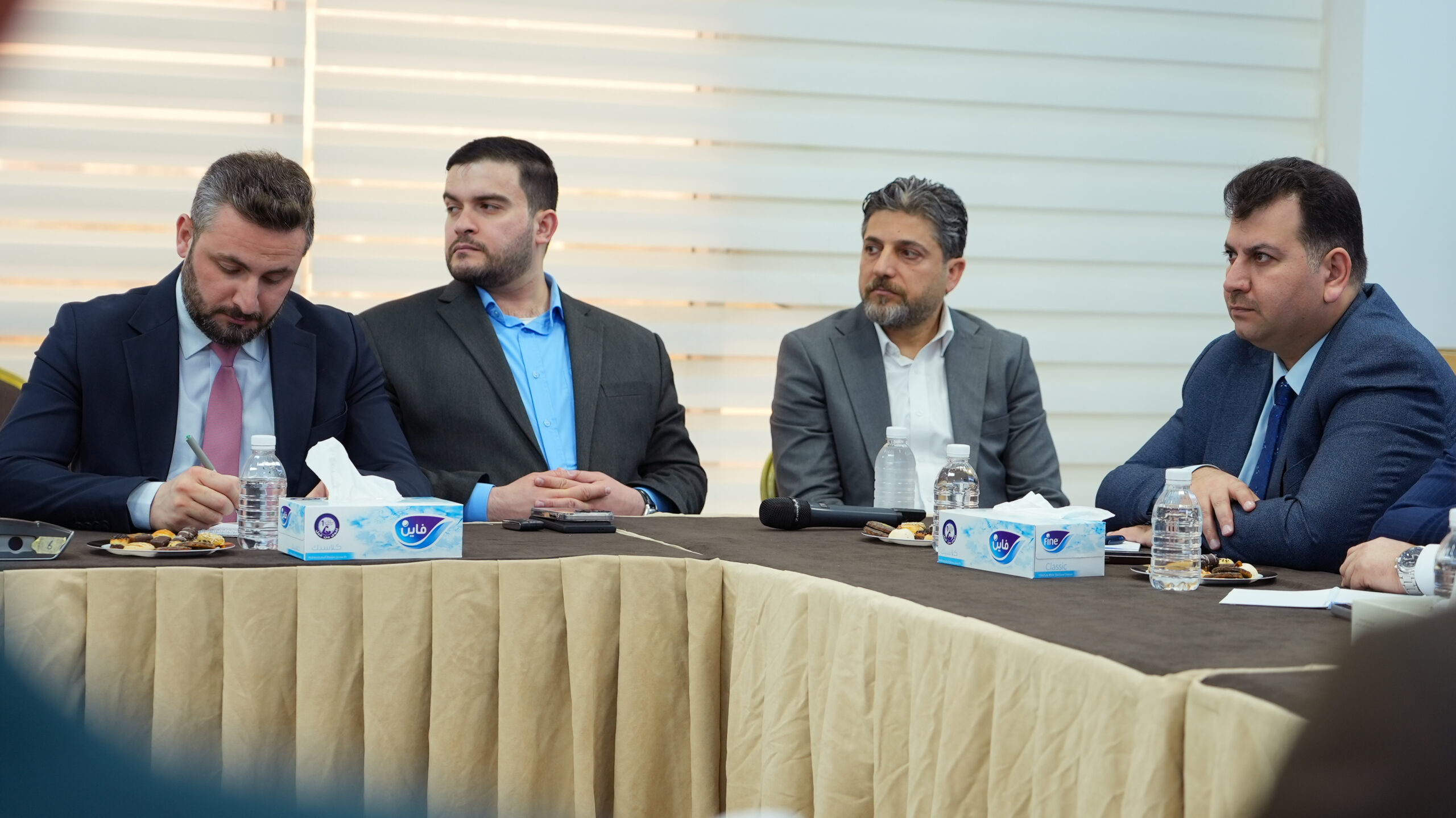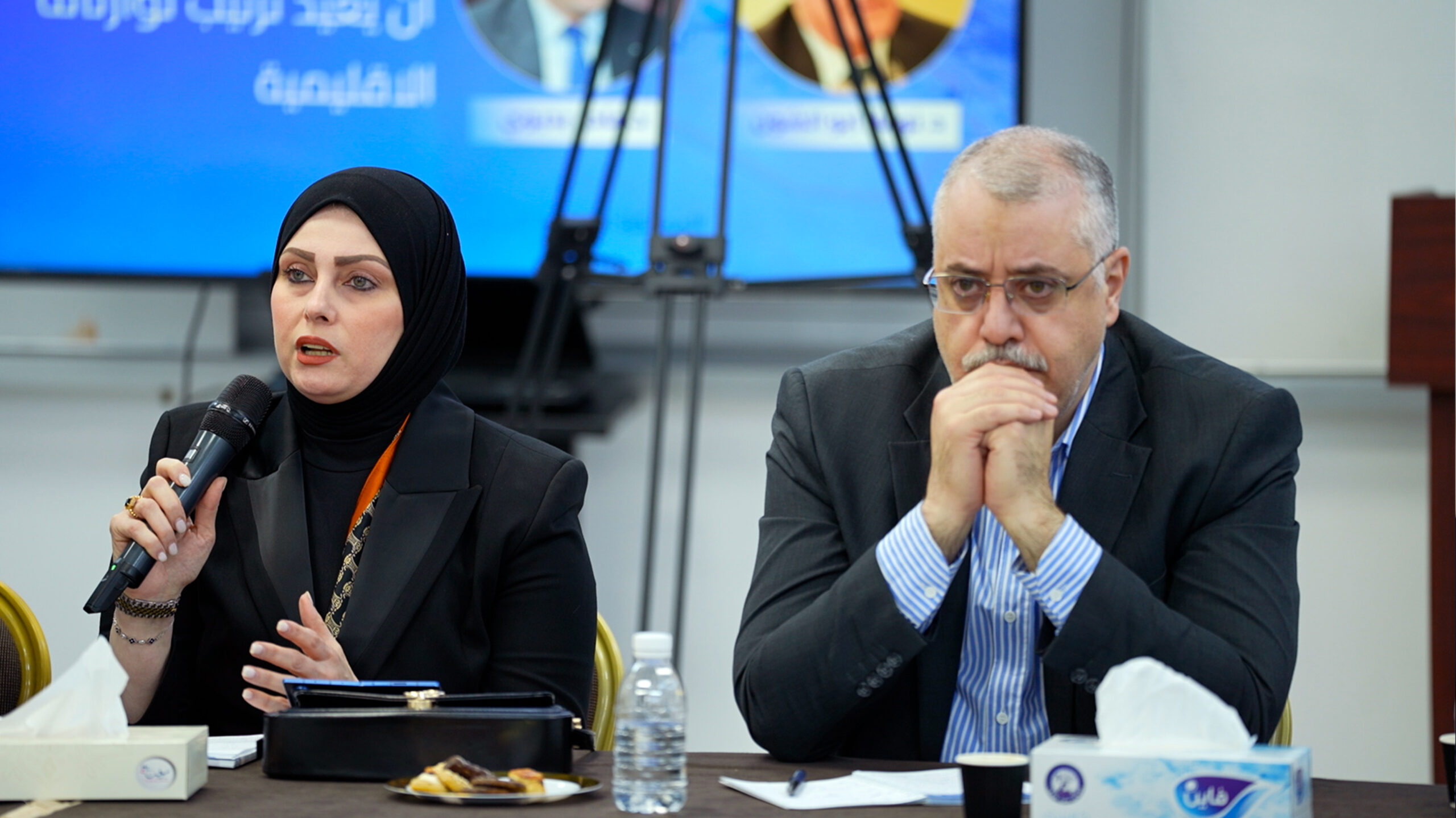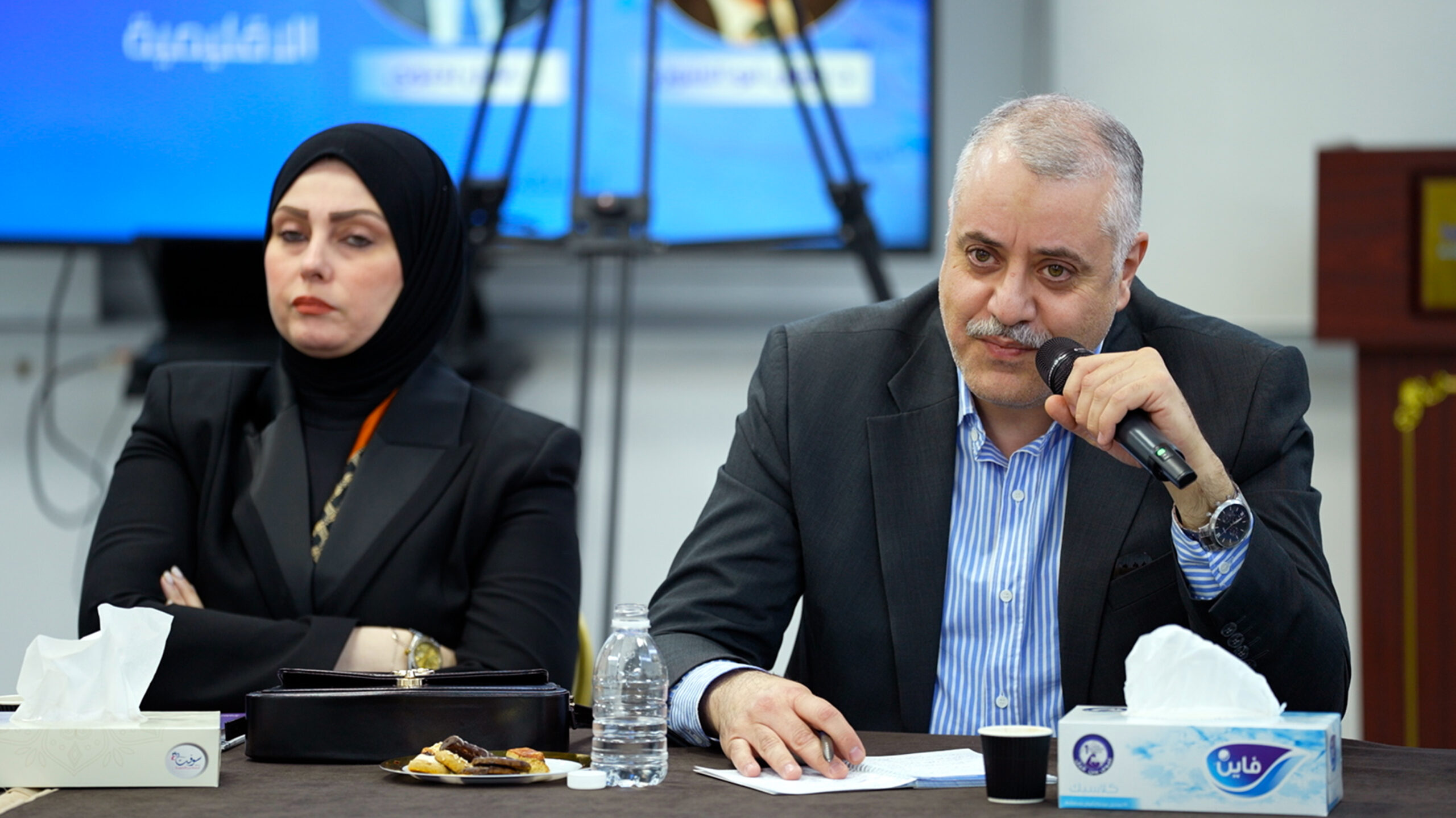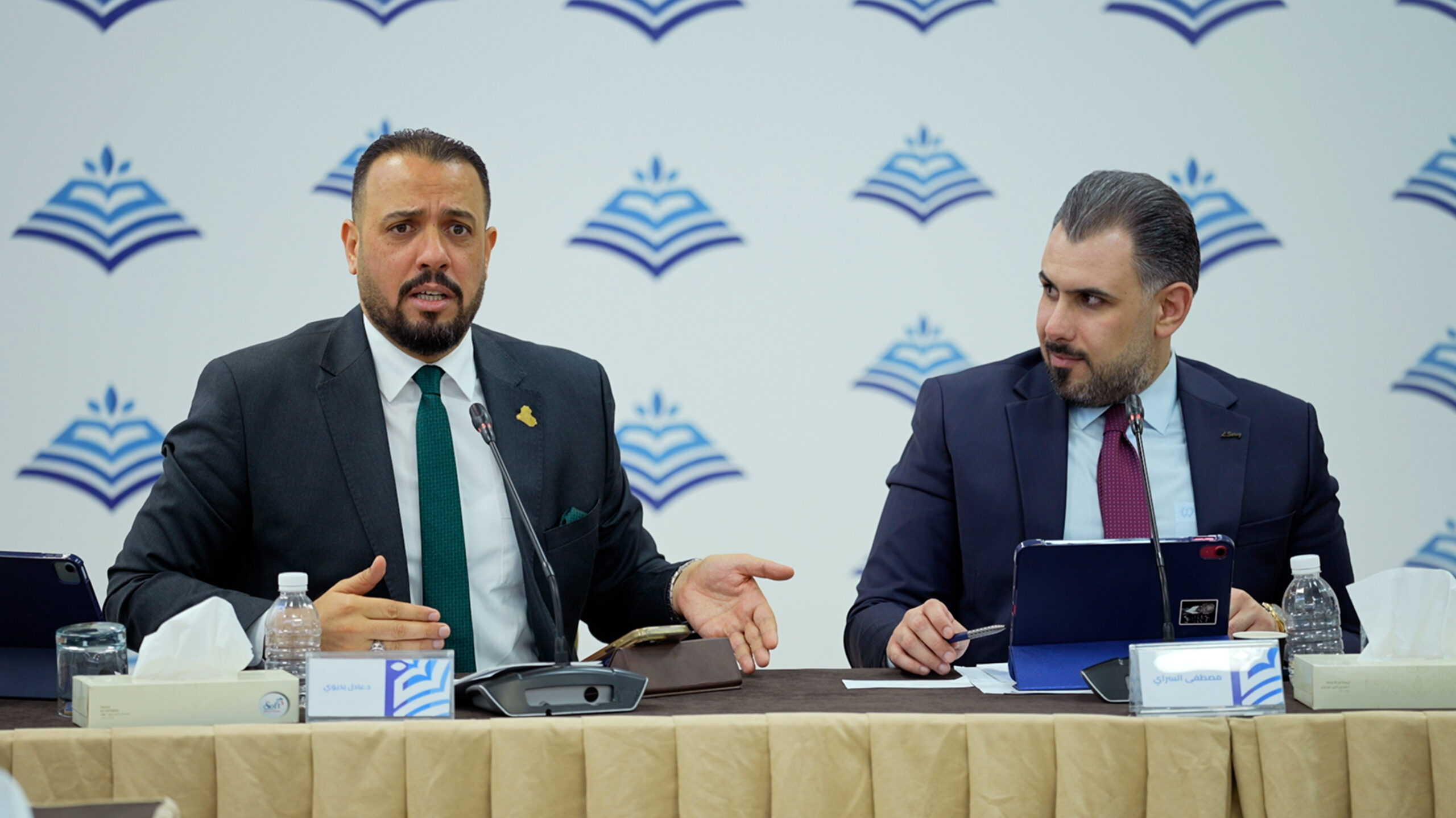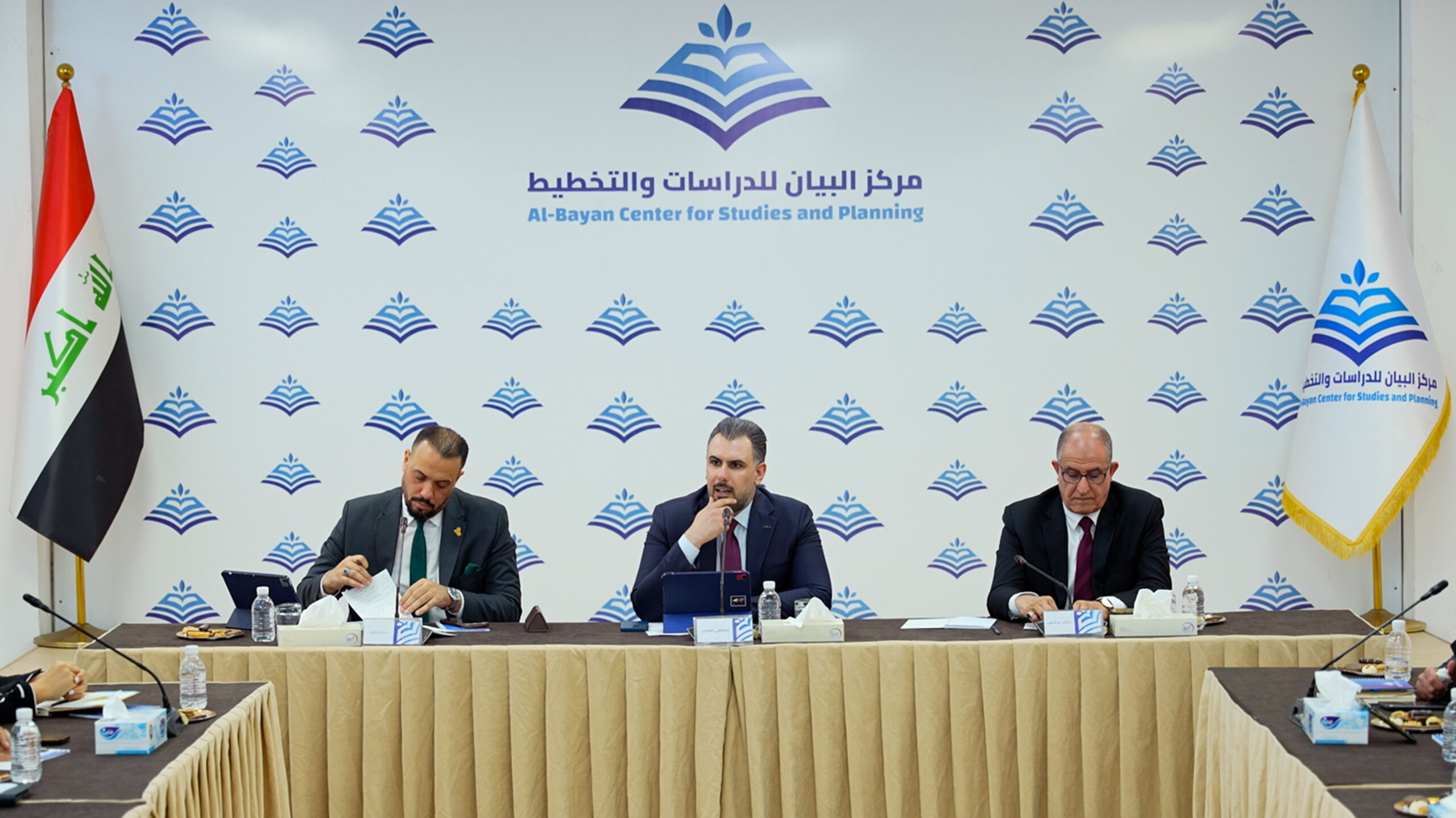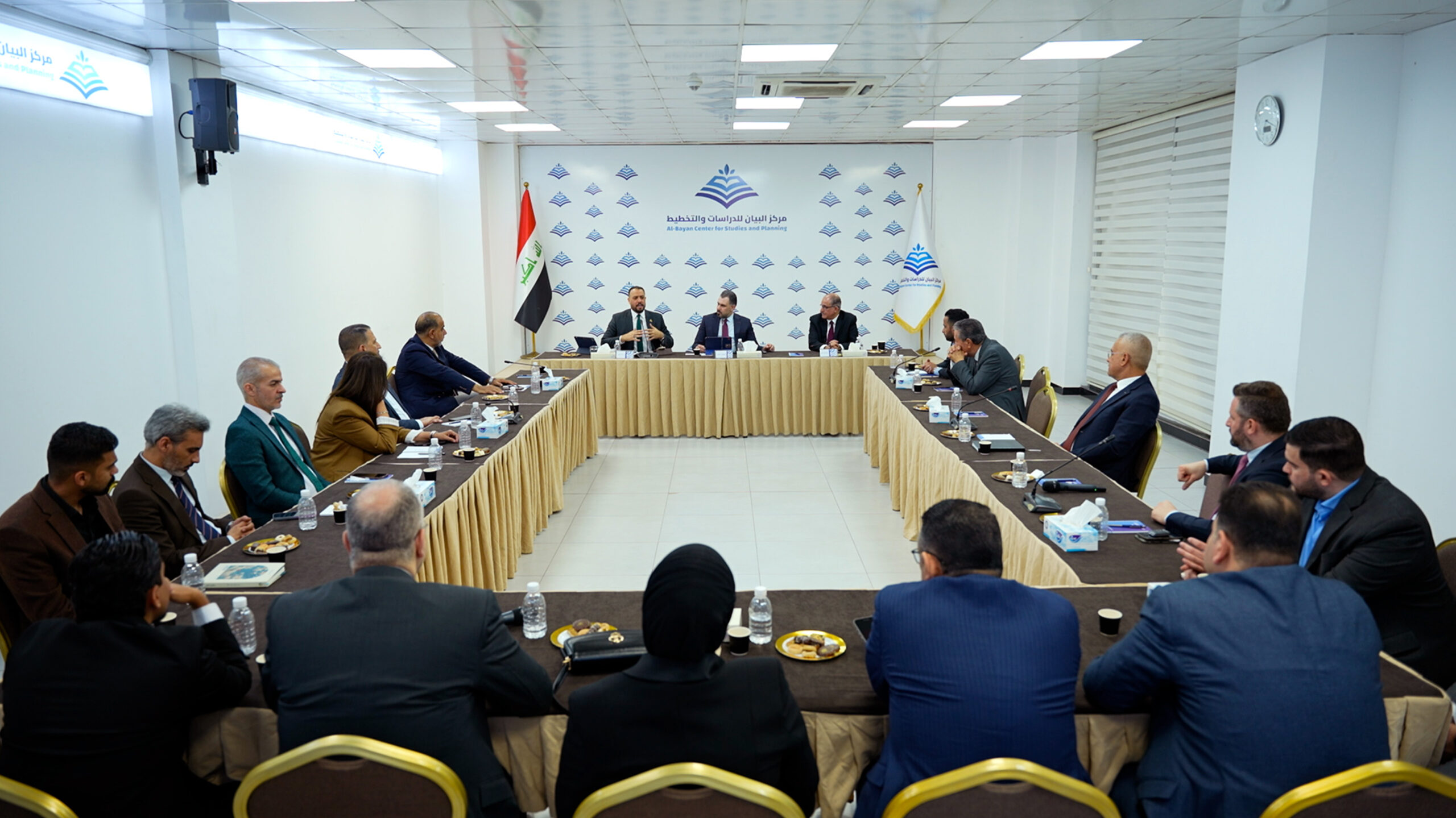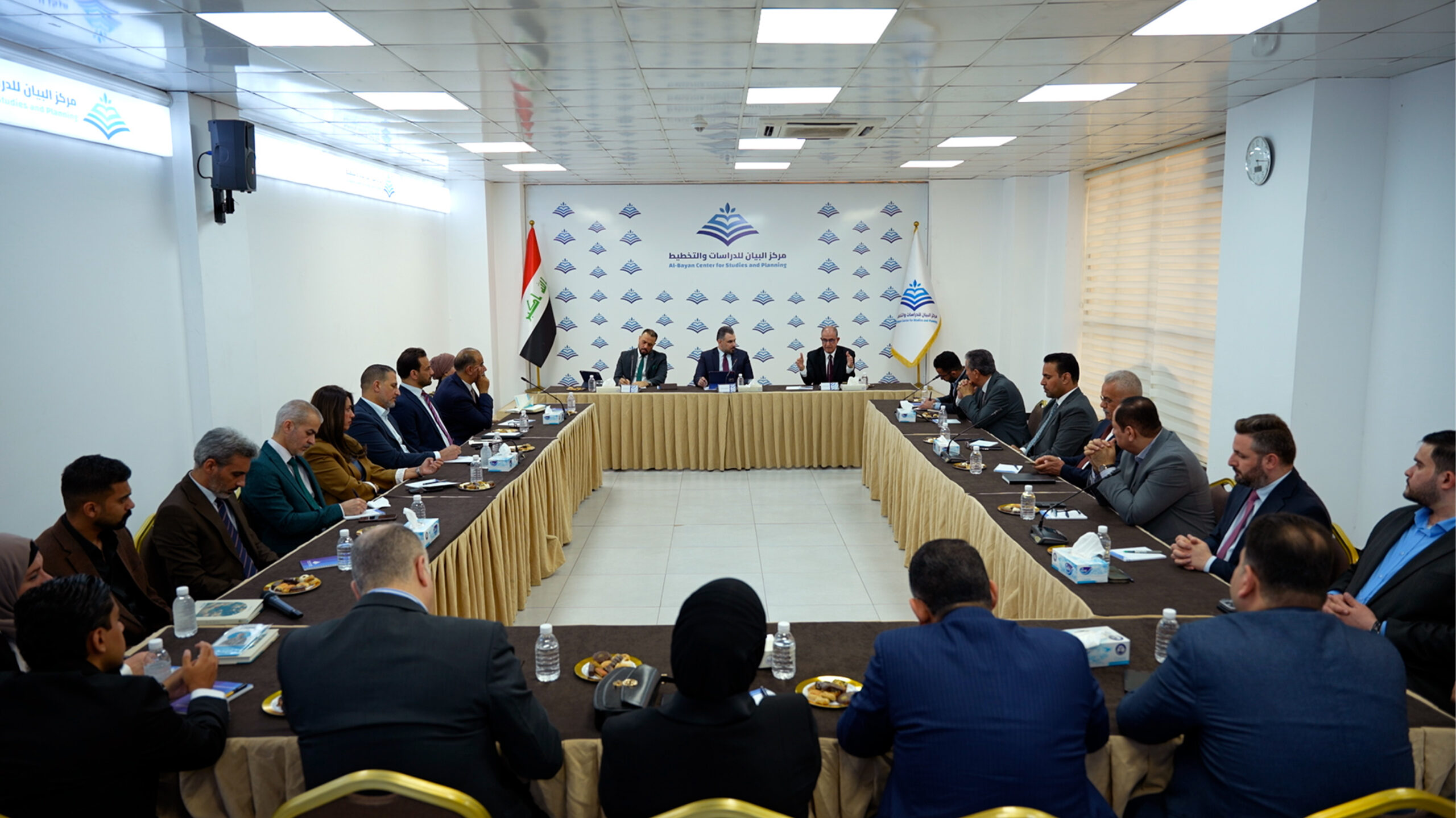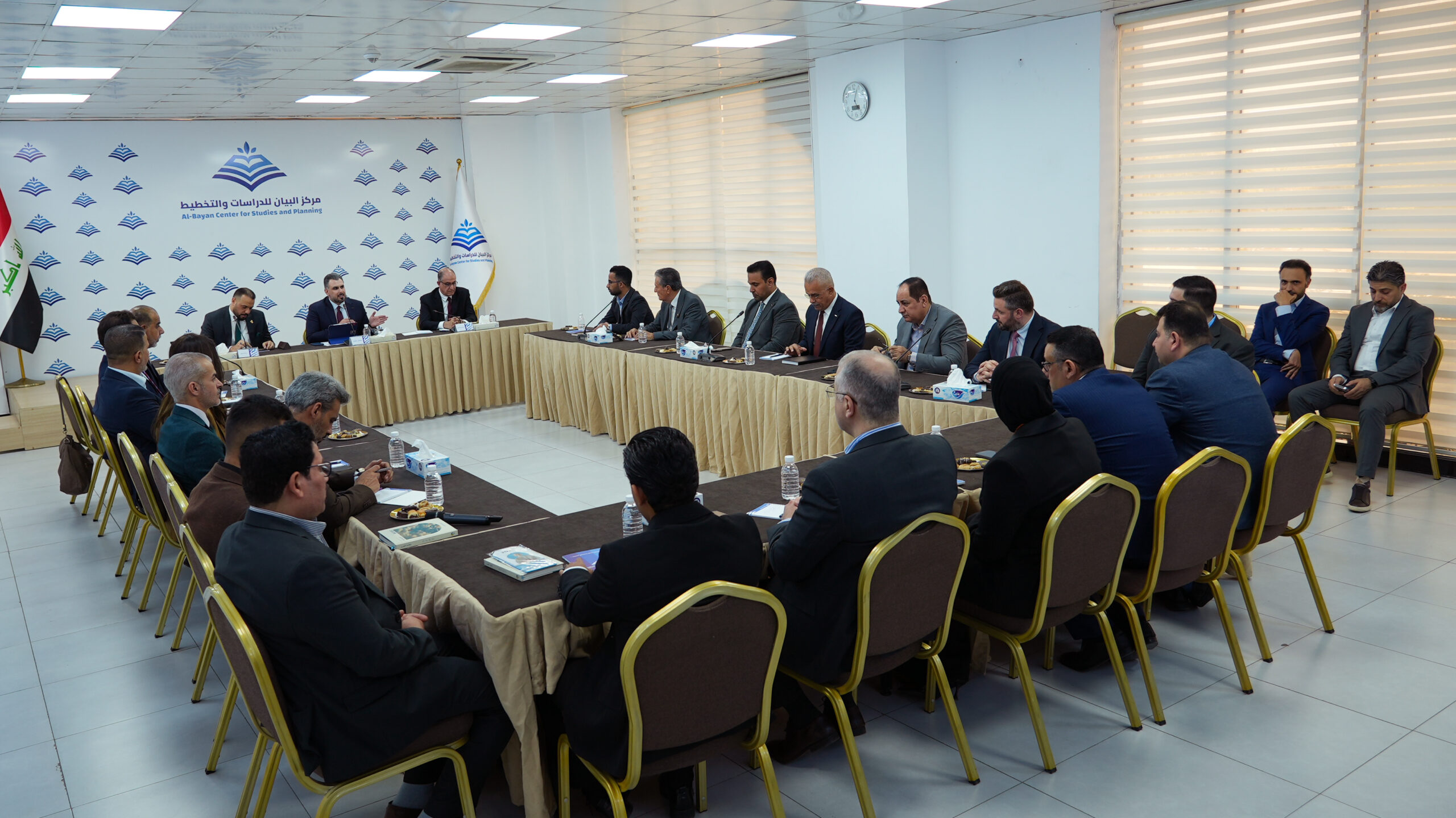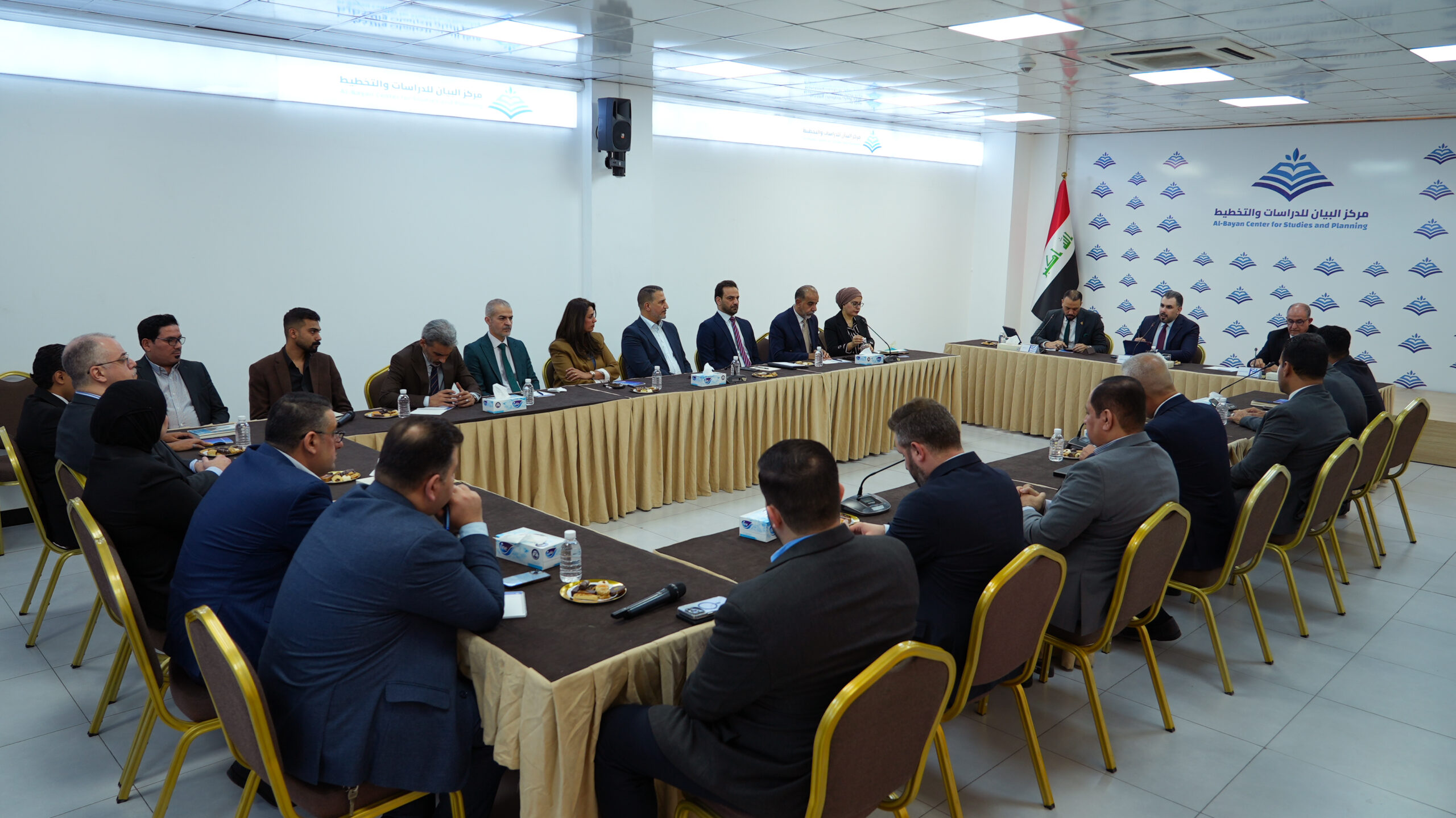

The Al-Bayan Center for Studies and Planning held a dialogue session entitled “Iraq and Neighboring States: How Can Iraq Restore Its Regional Balances?”, which discussed Iraq’s position amid the political changes and accelerating conflicts in the region, especially after the events of October 7 and the repercussions that followed.
The Center hosted researcher and politician Dr. Nofal Abu al-Shawn and Dr. Adel al-Badawi, Dean of the College of Political Science at the University of Baghdad, with the participation of a select group of academics, researchers specializing in international relations and strategy, and diplomats.
Abu al-Shawn explained that Iraq has become closer to a “market” that consumes solutions rather than produces them, attributing this to the heavy reliance on a rentier economy and weak control over the energy and water sectors. He stressed that the solution begins internally, through reforming the political system and moving beyond the quota-based system, in a way that contributes to building a more stable foreign policy.
For his part, al-Badawi indicated that recent events have revealed the fragility of the notion of “balance,” as Iraq has turned into an arena for indirect conflict. He stressed the importance of transforming Iraq into a regional hub that serves the interests of neighboring countries by strengthening economic projects such as the “Development Road” and diversifying the sources of the economy. This is to be achieved through a set of fundamental pillars that would make Iraq a permanent corridor for shared interests, and through adopting an approach grounded in high-level diplomacy.
The seminar also included interventions that focused on the existence of dysfunction in state administration, indicating that Iraq is living in a state of contradiction in its strategic and geographic conceptions. The participants stressed the need for Iraq to define its role as an active state possessing a clear strategy, rather than being merely an arena for conflicts.
The seminar concluded by emphasizing the importance of Iraq moving from importing solutions to producing them, through intelligent crisis management, strengthening regional relations, and taking clear positions that serve its national interests.