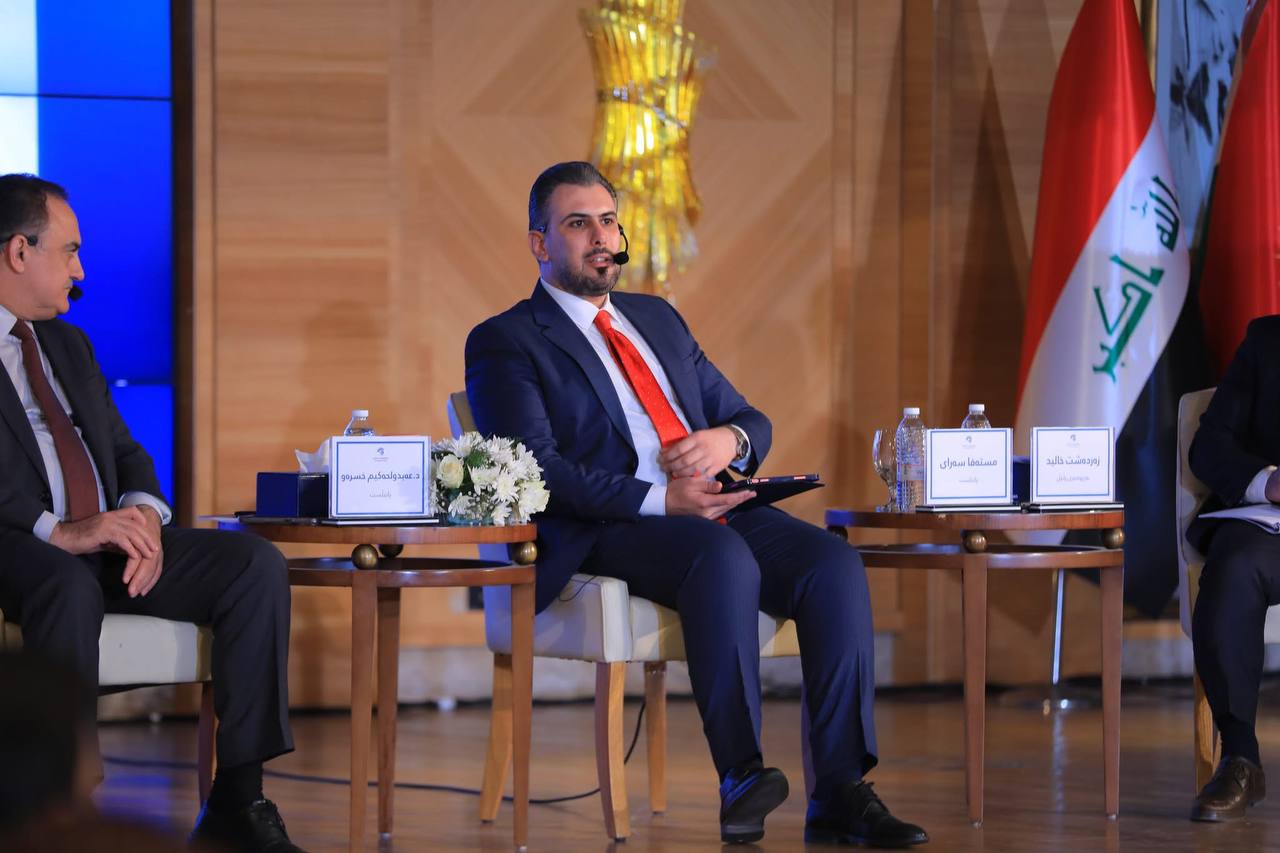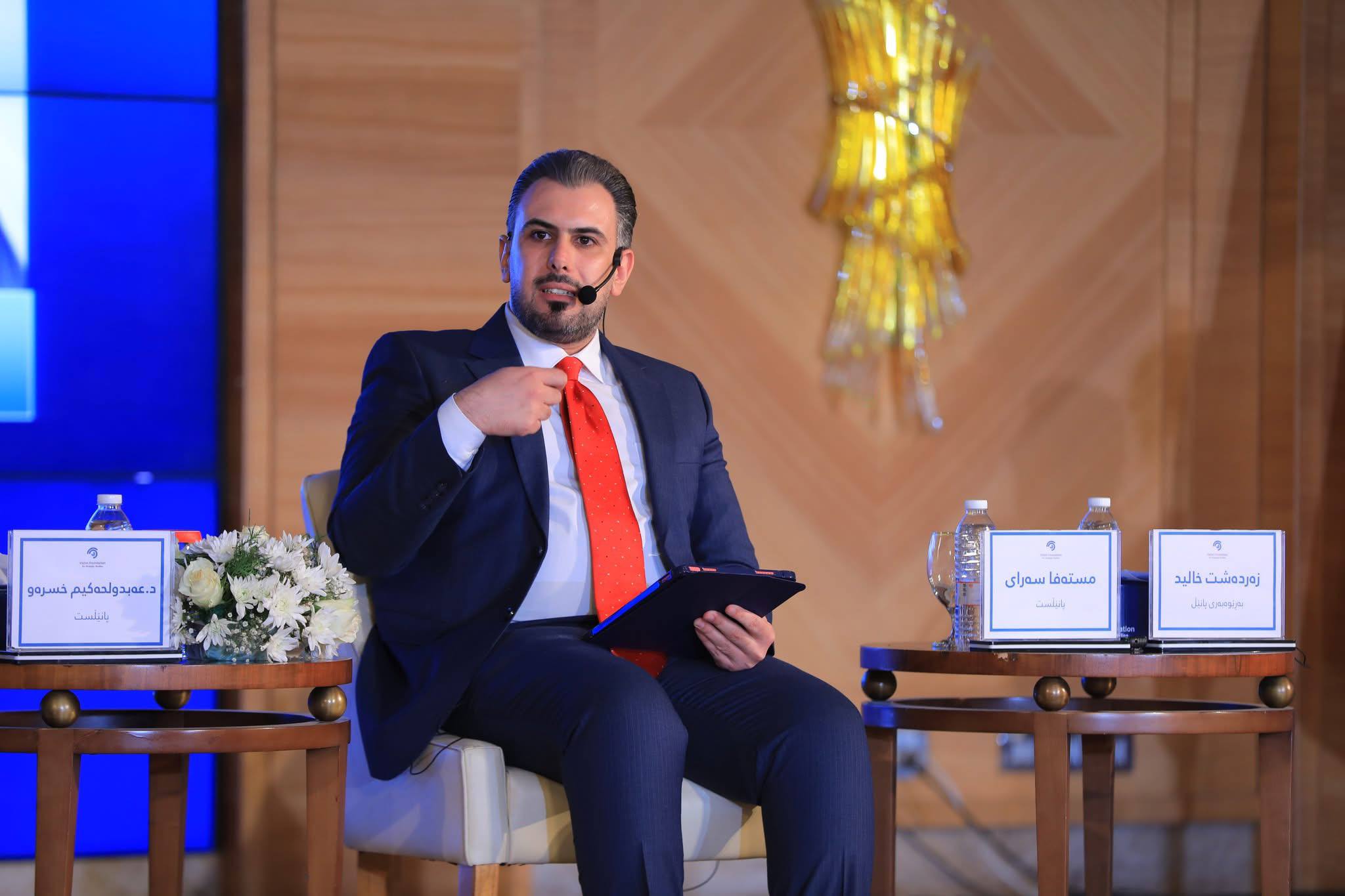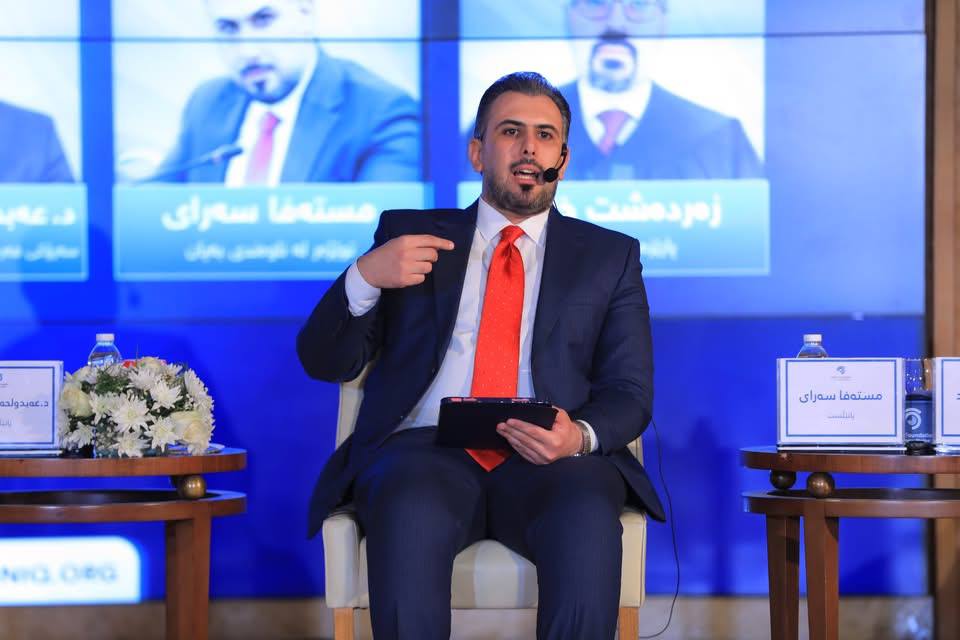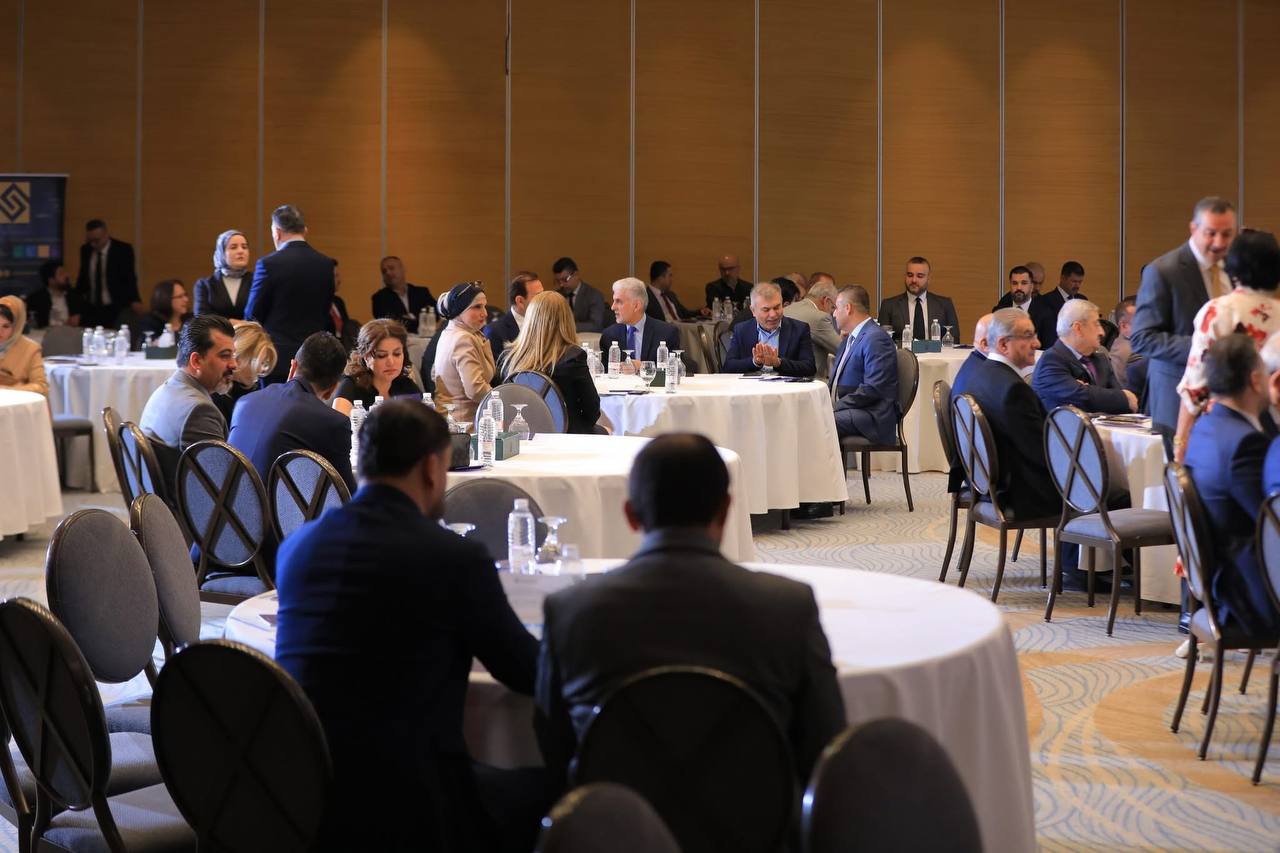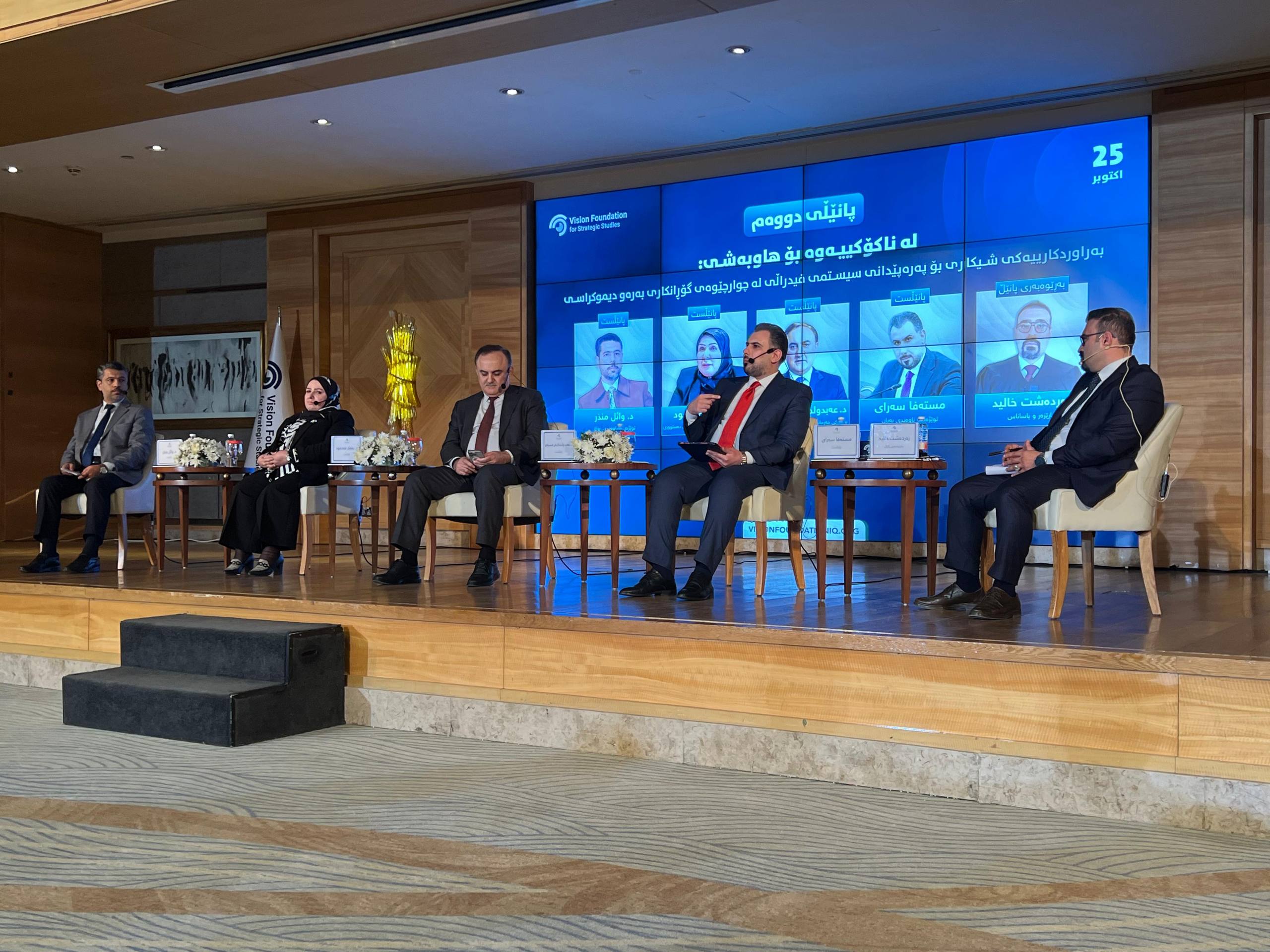

Al-Bayan Center for Studies and Planning participated in the “Vision Forum” organized by the Vision Foundation for Strategic Studies in the city of Sulaymaniyah, held under the title: “Twenty Years After the Approval of the Constitution… Where Do We Stand on Federalism and Decentralization in Iraq?”
The Center was represented at the forum by the Head of the Research Department, Mustafa Al-Saray, who delivered a presentation during the session entitled: “From Dispute to Partnership: An Analytical Approach to Developing the Federal System in the Context of Democratic Transformation.” He emphasized a number of key points related to the reality of federalism in Iraq and the challenges of its implementation.
Al-Saray explained that federalism in Iraq has shifted, as a result of political disputes, from a constitutional and institutional system to an identity-based and political conflict. He noted that although the Constitution laid the foundations for federalism, the practical application has produced a model different from what is stipulated therein.
He clarified that this shift has created a structural dilemma in dealing with the federal system. While Baghdad views federalism as a means to share power, diversify resources, and distribute roles in a manner that preserves state unity, the Region views it as a mechanism to safeguard its own political and economic gains and objectives.
Al-Saray pointed out that these differing approaches have produced a complex triad within the structure of federalism, consisting of: an identity-based vision, a strategic objective, and partial reform measures — emphasizing that any solution must be grounded in these three dimensions.
He proposed a set of steps and measures to address the existing challenges, most notably: redefining the relationship between Baghdad and the Region, and determining whether it is one of cooperation, partnership, or integration; enacting legislation that aligns with the requirements of the federal system; maintaining dialogue through a high-level federal committee comprising representatives of both sides to follow up on contentious issues in areas such as education, health, and resources; implementing clear economic reforms to strengthen the concept of “economic federalism”; the necessity of legislating the Law of the Federation Council and forming it in accordance with what is stipulated in the Constitution; and introducing constitutionally grounded amendments that are agreed upon politically and socially, stemming from long-term dialogue. He also stressed the importance of supporting economic integration projects — particularly the “Development Road” — as a model that can enhance interconnectedness and shared benefits. Additionally, promoting a culture of political partnership through academic and cultural elites and civil society organizations, alongside political elites, is essential.
In concluding his remarks, Al-Saray underscored the need to clearly redefine the relationship between the Region and Baghdad, asking: Are we thinking in terms of two states, or a genuine federal relationship? He affirmed that federalism today suffers from administrative issues, and that any alternative to it is limited to three options: two states, a confederation, or a return to centralization — options that are not supported collectively by political forces, particularly the Shi‘a or the Sunnis.